
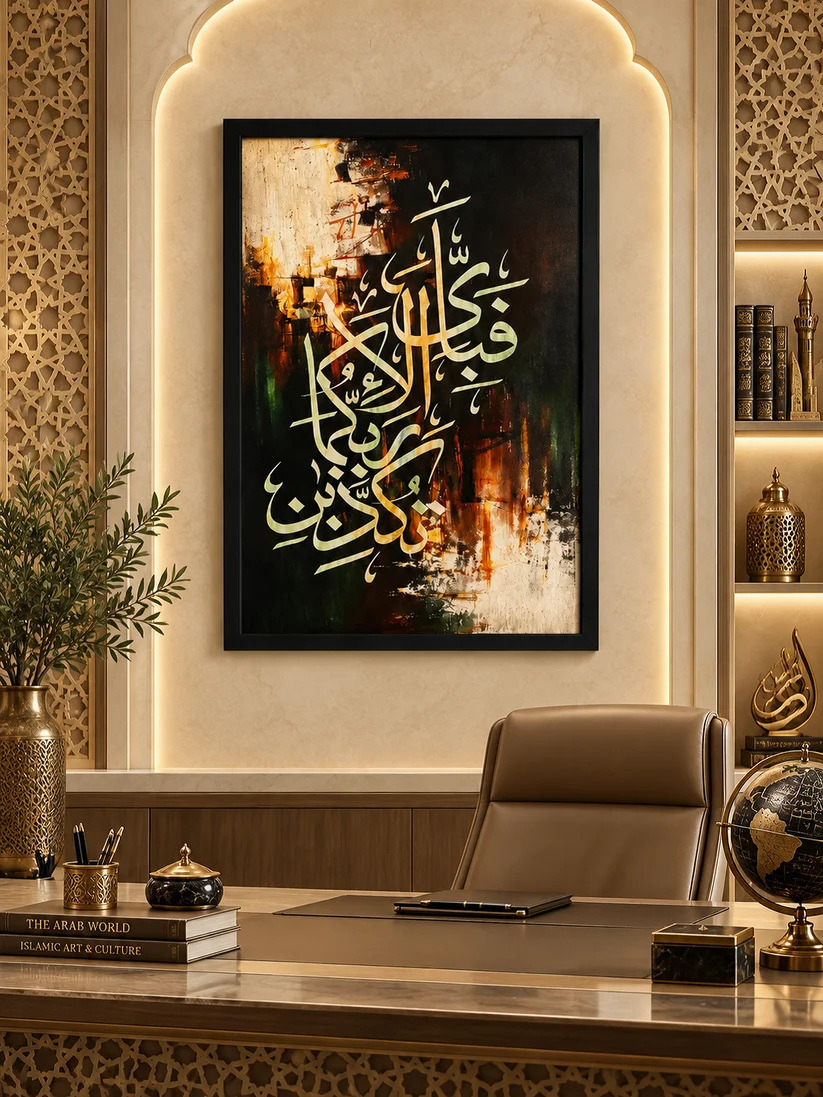
Arabic Calligraphy Islamic Wall Art brings beauty and faith to your home. Arabic Calligraphy Islamic Wall Art combines artistic beauty with meaningful words, making it a popular choice for living rooms, bedrooms, offices, prayer spaces, and other interiors.
Arabic calligraphy is more than decorative writing. It transforms Arabic letters into artistic forms through carefully arranged lines, flowing curves, balanced shapes, and elegant compositions.
Understanding the Beauty of Arabic Calligraphy
Arabic calligraphy is a visual art form in which Arabic letters are arranged to create beautiful and meaningful compositions. Artists consider letter shapes, spacing, proportions, movement, and the relationship between text and empty space.
The History of Arabic Calligraphy
Arabic calligraphy developed over centuries as Arabic writing became an important means of recording and presenting religious, literary, and administrative texts. Arabic calligraphy wall décor.
Islamic wall art for home, Several calligraphic styles emerged, each with its own characteristics. Kufic is known for its angular, geometric appearance. Naskh is generally clear and readable, while Thuluth is recognized for its sweeping curves and monumental compositions.
The Spiritual Meaning of Islamic Calligraphy
Islamic calligraphy can serve as a reminder of faith, gratitude, patience, and devotion. Its meaning depends on the words displayed and the personal connection a viewer has with them.
For example, the word Allah represents the name of God in Islam. Bismillah refers to beginning in the name of Allah, while the Shahada expresses the central Islamic testimony of faith.
How to Care for Arabic Calligraphy Artwork
Proper maintenance helps preserve both the finish and the legibility of decorative artwork.
1. Dust regularly: Use a soft, dry microfiber cloth where appropriate.
2. Avoid harsh chemicals: Solvents and abrasive cleaners can damage paint, acrylic, printed surfaces, or metallic finishes.
3. Check the mounting: Inspect brackets and fasteners periodically, especially for heavy metal pieces.
4. Control moisture: Avoid placing materials in damp areas unless they’re designed for those conditions.
5. Limit direct sunlight: Strong sunlight can fade some inks and finishes over time.
6. Handle carefully: Hold the frame or supporting structure rather than pressing directly on delicate lettering.
7. Follow manufacturer instructions: Cleaning methods vary by material and finish.
Conclusion
Arabic Calligraphy Islamic Wall Art offers a meaningful way to combine artistic expression, cultural heritage, and personal taste. From elegant Allah name designs and Bismillah panels to Ayatul Kursi compositions and modern minimalist pieces, there are options for many types of homes and offices.
Related Ads
Leave feedback about this